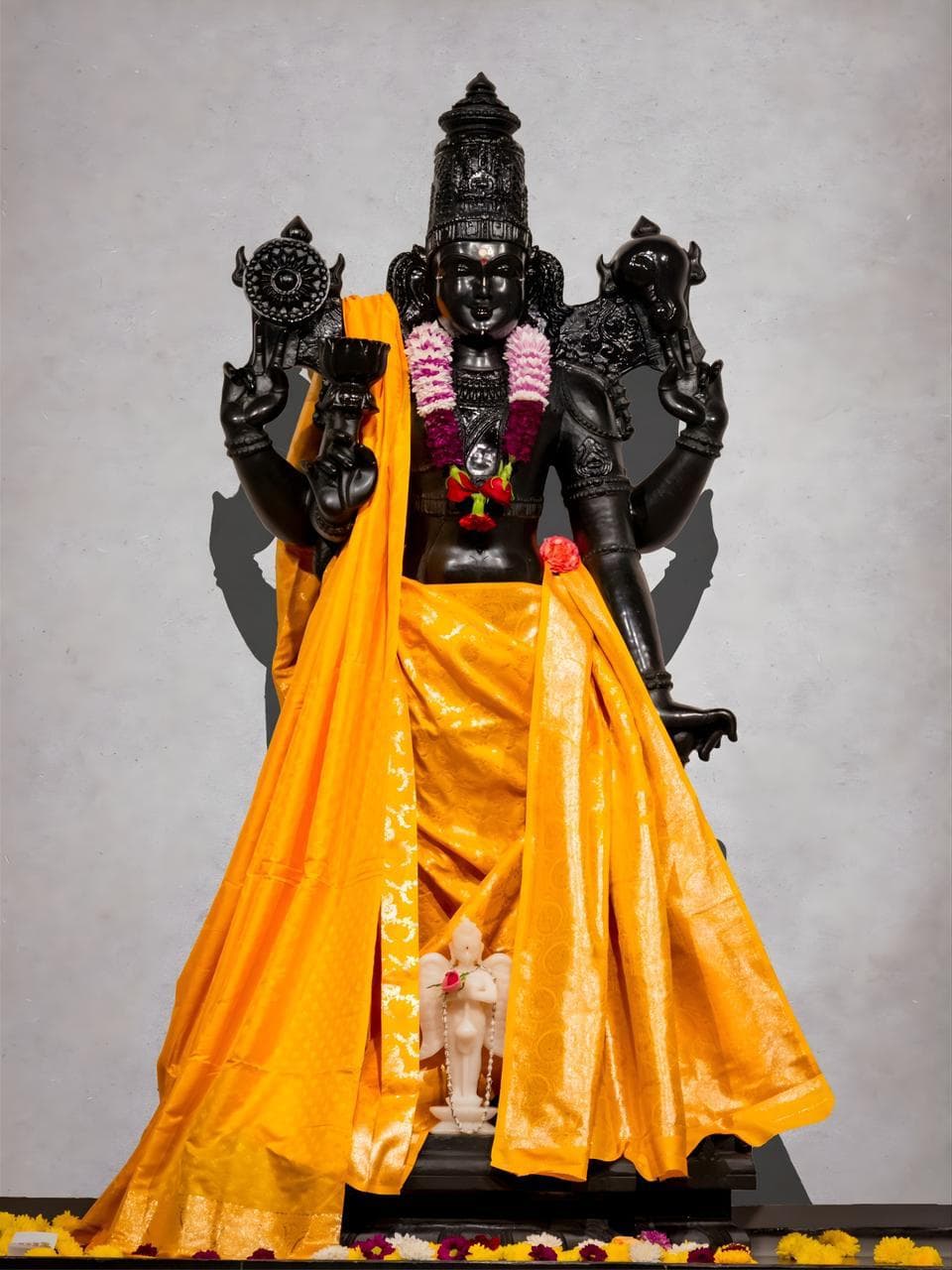
Sri Hari Sringar
Śṛṅgāra Kalā – The Divine Art of Adorning the Lord In the ancient tradition of Sanātana Dharma, Śṛṅgāra Kalā (the sacred art of adornment) is not merely decoration but a form of deep worship. When devotees adorn Lord Viṣṇu or Sri Krishna, each ornament, flower, and fragrance becomes a mantra in itself, an offering of the heart, a reflection of divine beauty, and a meditation on the Lord’s eternal glory. From the radiant Kaustubhā Mani on His chest to the sacred Śrīvatsa mark symbolizing the presence of Mahālakṣmī, every ornament carries profound esoteric meaning. The Vaijayantī Māla, woven with forest flowers and imbued with the essence of the five elements, drapes the Lord in harmony with all creation. The lotus in His hand radiates purity, while His weapons - Sudarśana Chakra, Kaumodakī Gada, Śaṅkha, and Padma - signify His role as the eternal preserver of dharma. In the traditions of Vaishnavism and Bhakti, Śṛṅgāra is a form of devotion (bhakti-rasa). The Lord, though beyond form, is lovingly served through alankāra (divine adornment), revealing His beauty in ways that elevate the heart and mind of the devotee. Saints and scriptures remind us that decorating the deity is not for worldly pleasure, but to recognize His Ananta-Saundarya, His infinite and transcendental beauty. In temples and homes, the Śṛṅgāra of Vishnu or Krishna is a living ritual. Fragrant sandalwood paste, fresh garlands, silken garments, and shimmering ornaments are all imbued with mantra and prayer. Each act of offering becomes a step towards darśana, seeing and being seen by the Divine, where the Lord’s beauty awakens the soul’s longing for liberation.