Sri Hari Offerings
Loading...
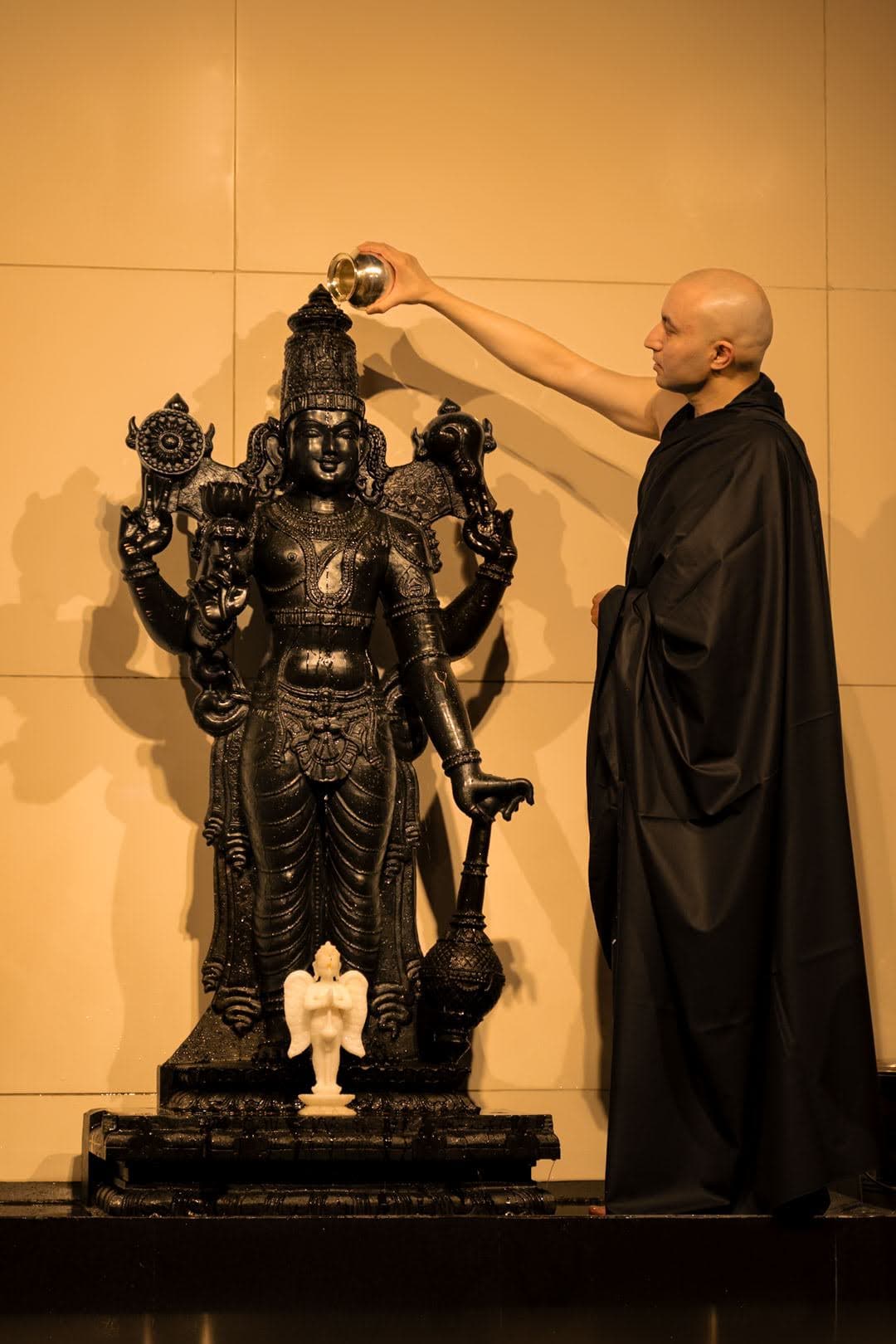
Abhishekam
The Abhishekam is one of the most sacred offerings in Sanātana tradition, a divine act of bathing the consecrated form of the Divine with sanctified waters, milk, honey, and fragrant essences. It is not merely an external ritual but a symbolic cleansing of the devotee’s heart, where each drop poured upon the Deity washes away lifetimes of impurities and awakens inner purity and devotion. In the subtle realm, Abhishekam invokes the latent energies of the Divine form. When sacred mantras like the Viṣṇu Sahasranāma or Lalitā Sahasranāma are chanted during the ritual, each name vibrates through the waters, infusing them with the cosmic consciousness of the Divine, transforming the act into a living dialogue between the seeker and the Lord. At Śrī Hari Temple, these Abhishekams are performed on spiritually charged tithis. On Ekādaśī, the day sacred to Lord Viṣṇu, the morning Abhishekam becomes a celebration of surrender and purity, invoking His boundless grace. On Pūrṇimā and Amāvasyā, when the moon completes and renews its cycle, the evening Abhishekam resonates with the luminous energy of Śrī Lalitā Tripurasundarī, symbolizing fullness, transformation, and inner awakening. On special occasions such as Navarātri, Mahāśivarātri, Janmāṣṭamī and other sacred festivals, the Abhishekam is performed with even greater fervor, devotion, and elaborate offerings, allowing devotees to immerse in the Divine presence more deeply. We warmly invite you to participate in these sacred observances. Please click here to select your preferred days, and as a token of blessings, a small packet of dry prasādam from that day’s ritual will be lovingly sent to you (domestic delivery only). Through these sacred offerings, devotees align their hearts with cosmic rhythms, bathing not only the image of the Divine but their own soul in streams of sanctity, surrender, and bliss.
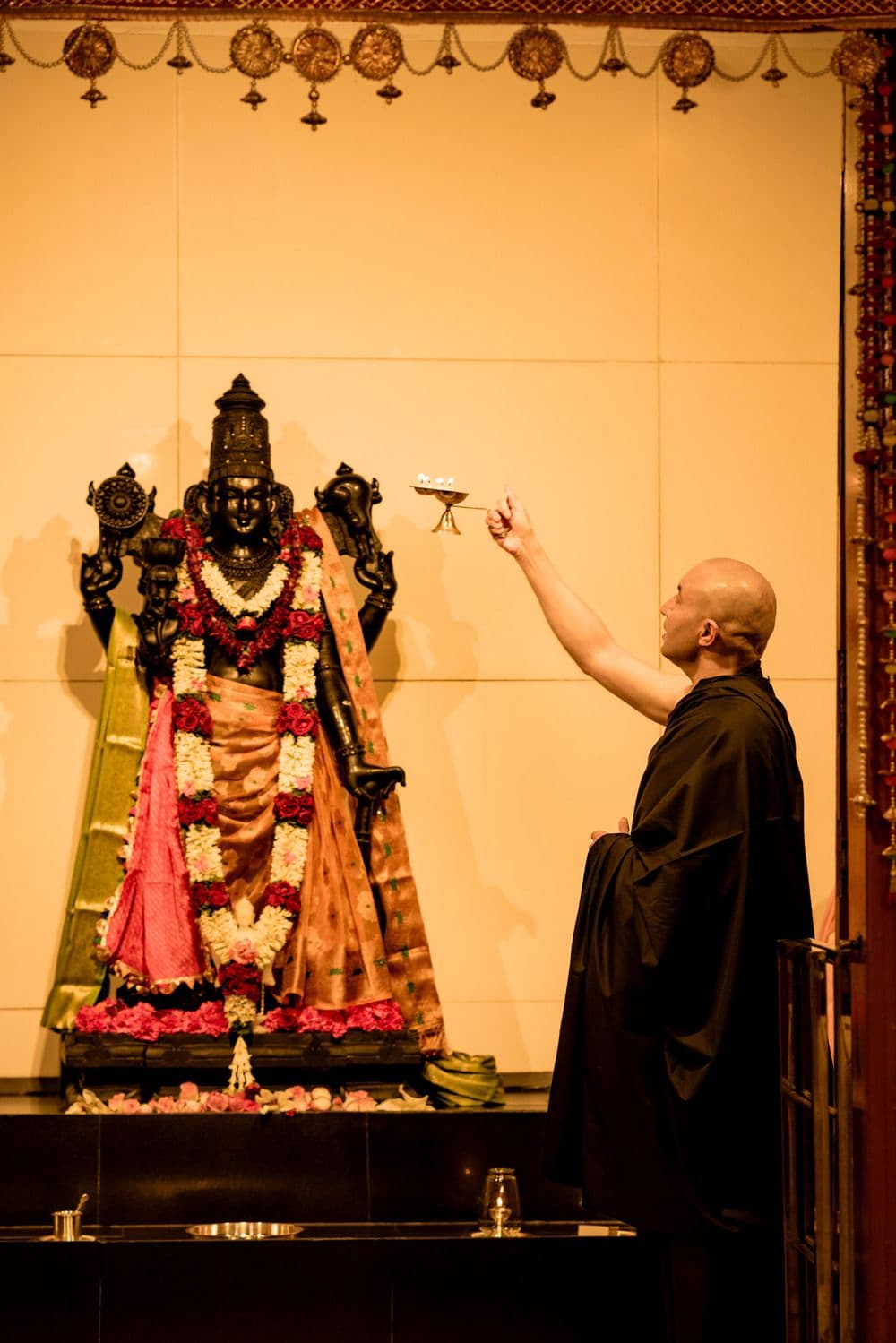
Aarti
Śrī Hari Ārati is a sacred hymn of devotion, invoking the Divine in both aspects - Puruṣa as Lord Viṣṇu and Prakṛti as the Divine Mother. Composed by Om Swami, it is a garland of praises offered at the feet of the Supreme. Every word is a flame of love, every note a petal of surrender, every breath a prayer of gratitude that lifts the heart into truth and grace. The hymn begins with “जय जय आरती हरि तुम्हारी, विष्णु प्रभु श्रीनाथ मुरारी” a jubilant call to Śrī Hari, the all-compassionate Lord Viṣṇu, Śrīnath the beloved of Goddess Lakṣmī, and Murāri, the flute-player who enchants the worlds. पीताम्बर वैजयंती माला, मेघवर्ण भुज नयन विशाला He shines in golden yellow, adorned with the Vaijayantī garland, His form like a rain-bearing cloud, His arms vast, His eyes radiant with infinite kindness. श्रीवास विभु श्रीवत्स-वक्षा, on His chest rests the sacred Śrīvatsa, the mark of the Divine Mother, for He is Śrīpati, the eternal consort of Goddess Lakṣmī. श्रीमाता श्रीपति त्रिपुरारी — She is Shri Mata, the Divine Mother of all, the very source of love, grace, and protection for every living being. Her consort, Shri Pati Tripurari, is the great Lord Shiva, the conqueror of the three worlds With conch, lotus, mace, and discus in His hands, He blesses the worlds and upholds dharma. Seated upon Śeṣa and carried by mighty Garuḍa, He radiates majesty and compassion. क्षीर सागर वैकुण्ठ निवासा, लक्ष्मी पखारे चरण पुरारी dwelling in the ocean of milk, in the blissful abode of Vaikuṇṭha, He is tenderly served by Goddess Lakṣmī at His lotus feet. The Supreme, all-pervading One, He is the source of harmony, beauty, and strength before whom even the greatest bow with reverence. The Ārati also glorifies the Divine Mother: “जय जगजननी जय जगवन्दना, जय अम्बे जय देवकीनन्दन” saluting Her as the origin of creation, and hailing Śrī Hari as the beloved son of Devakī. Together, Lord and Mother shine as the refuge and radiance of the entire universe. With deep sweetness, the hymn honors the eternal divine couples - Sītā–Rāma, Rādhā–Kṛṣṇa, Umā–Śaṅkara, and Śrī–Śrīpati - each a reflection of the eternal union of Śakti and Śiva, of Mother and Lord. It rejoices in the many forms of Śrī Hari: Narasiṁha, Vāmana, Govinda, Mohana, Mohinī, Hari, Śrī Hari, and Hari-Hara proclaiming that in every form shines the same Infinite, the same Compassionate One. The Ārati concludes with a joyful victory call: “श्री हरि भगवान की जय! गोविंदा गोविंदा गोविंदा!!! नमो पार्वतीपतये, हर-हर महादेव!!!” Victory to Śrī Hari, the Supreme Lord! Victory to Govinda! Salutations to Lord Śiva, beloved of Pārvatī. In this sacred hymn we hail Śrī Hari in all His forms, for each form is filled with radiance and glory. Every verse is gratitude, every name is worship, every praise is a celebration of the Divine. That is the essence of Śrī Hari Ārati - devotion without measure, love without end.}
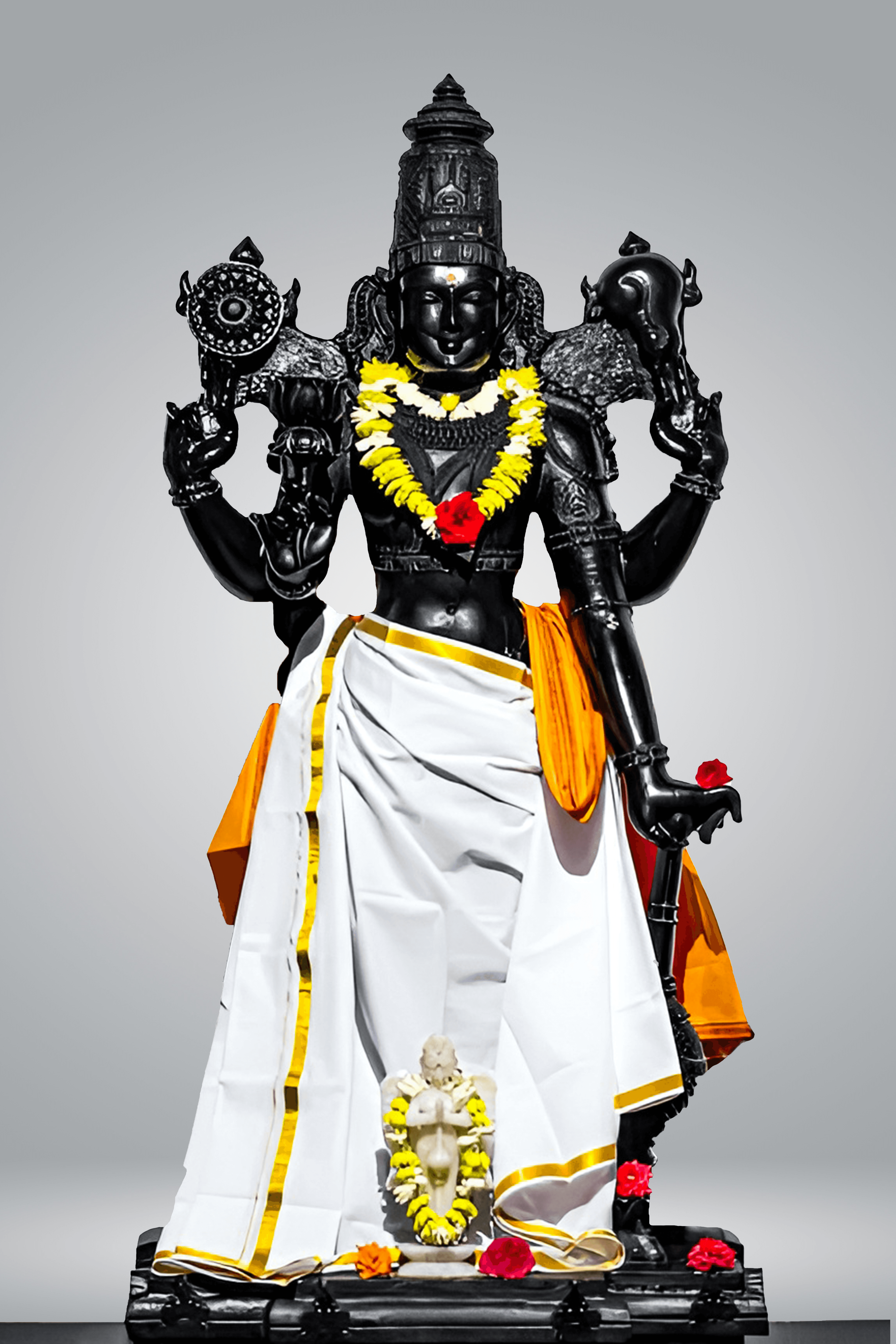
Sahasranama
At Sri Badrika Ashram, the sacred recitation of the Sahasranāma, the thousand divine names of the Lord, takes place every morning and evening without fail. Since the auspicious day when the Vigraha of Sri Hari Bhagwan was consecrated, this timeless chanting has never ceased. Each name uttered in devotion fills the air with sanctity, transforming the entire Ashram into a field of divine vibrations. It is not merely a practice, it is a living tradition, a continuous stream of praise flowing toward the Lord, day after day, breath after breath. In the Mahābhārata, Bhīṣma Pitāmah revealed Śrī Viṣṇu Sahasranāma, gifting the world the jewel of a thousand divine names of the Supreme Lord Viṣṇu. This sacred and powerful hymn invokes the Divine in His majestic masculine form, bestowing devotees with prosperity and liberation. Śrī Lalitā Sahasranāma, revealed in the Brahmāṇḍa Purāṇa, is the essence of all scriptures, composed by the Vāgdevīs on the command of Mā Lalitā Herself. In divine grace, the Divine Mother unveiled Her own glory to Lord Hayagrīva, who bestowed this celestial hymn upon Sage Agastya for the liberation of all beings. As Swamiji often shares, chanting the Sahasranāma is like calling upon the Divine through His thousand attributes, each name a key unlocking His infinite grace. It is among the most potent and powerful ways to invoke the Lord’s presence, awakening purity, strength, and peace within every heart that listens or recites. Through this sacred sound, devotees not only remember the Divine, they experience His nearness, His love, and His eternal protection.}
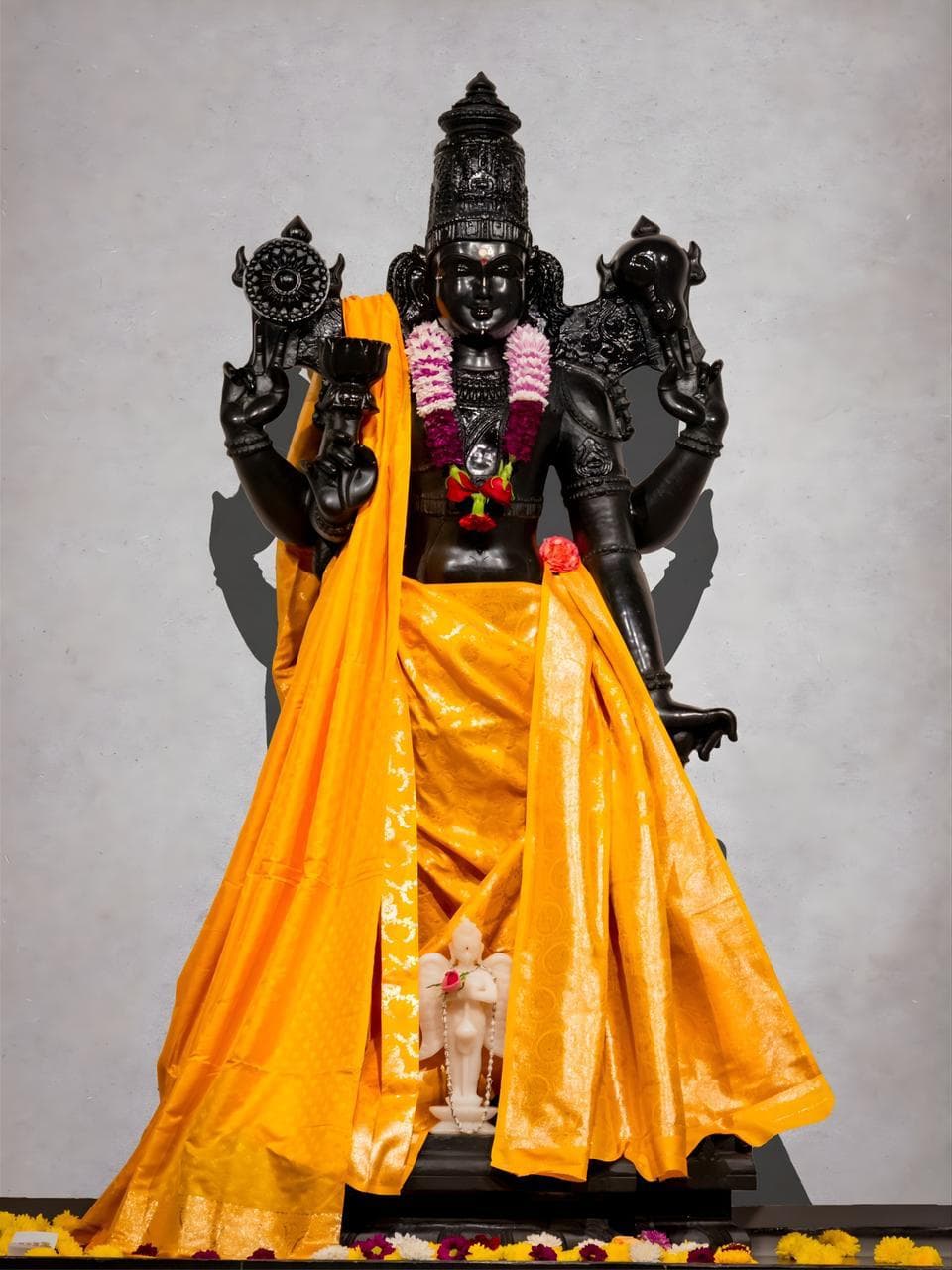
Sri Hari Sringar
Śṛṅgāra Kalā – The Divine Art of Adorning the Lord In the ancient tradition of Sanātana Dharma, Śṛṅgāra Kalā (the sacred art of adornment) is not merely decoration but a form of deep worship. When devotees adorn Lord Viṣṇu or Sri Krishna, each ornament, flower, and fragrance becomes a mantra in itself, an offering of the heart, a reflection of divine beauty, and a meditation on the Lord’s eternal glory. From the radiant Kaustubhā Mani on His chest to the sacred Śrīvatsa mark symbolizing the presence of Mahālakṣmī, every ornament carries profound esoteric meaning. The Vaijayantī Māla, woven with forest flowers and imbued with the essence of the five elements, drapes the Lord in harmony with all creation. The lotus in His hand radiates purity, while His weapons - Sudarśana Chakra, Kaumodakī Gada, Śaṅkha, and Padma - signify His role as the eternal preserver of dharma. In the traditions of Vaishnavism and Bhakti, Śṛṅgāra is a form of devotion (bhakti-rasa). The Lord, though beyond form, is lovingly served through alankāra (divine adornment), revealing His beauty in ways that elevate the heart and mind of the devotee. Saints and scriptures remind us that decorating the deity is not for worldly pleasure, but to recognize His Ananta-Saundarya, His infinite and transcendental beauty. In temples and homes, the Śṛṅgāra of Vishnu or Krishna is a living ritual. Fragrant sandalwood paste, fresh garlands, silken garments, and shimmering ornaments are all imbued with mantra and prayer. Each act of offering becomes a step towards darśana, seeing and being seen by the Divine, where the Lord’s beauty awakens the soul’s longing for liberation.